Pre-Operation Checklist: Ensuring Safe and Efficient Operation
Before starting your John Deere 5045E, a thorough pre-operation check is crucial for both safety and efficient operation. This isn't simply about avoiding breakdowns; it’s about preventing accidents. Think of it as a pilot's pre-flight checklist—essential for a smooth and safe journey. For more detailed instructions, see this helpful guide.
Check Fluid Levels: Verify that engine oil, coolant, and hydraulic fluid levels are within the specified ranges indicated in your owner's manual. Low fluid levels can lead to serious engine damage or hydraulic failure. (Low fluid levels can cause overheating, mechanical failure, or hydraulic system malfunction).
Inspect Tires: Examine your tires for proper inflation and any signs of damage, such as cuts or bulges. Incorrect tire pressure can negatively impact traction and handling. (Maintaining correct tire pressure is critical for optimal traction, fuel efficiency, and safety).
Examine Belts and Hoses: Carefully inspect all belts and hoses for wear, cracks, or leaks. Damaged belts or hoses can lead to power loss or fluid leaks. (Worn belts or damaged hoses can result in equipment failure and potential hazards).
Walk-Around Inspection: Conduct a thorough visual inspection of the entire tractor, checking for any loose components, leaks, or damage. This quick overview can prevent more significant problems later. (A visual inspection can identify potential issues before they lead to accidents or costly repairs).
Understanding the Dashboard: Your Tractor's Information Center
The instrument panel provides vital information about your tractor's operating status. Understanding these gauges and warning lights is essential for preventing problems and ensuring safe operation. Treat it as your aircraft's cockpit instrumentation—it's crucial for a safe flight.
Gauges: Familiarize yourself with all gauges—engine speed (RPM), fuel level, coolant temperature, hydraulic pressure, and battery voltage. These indicate the tractor's health. (Gauges provide real-time feedback on vital parameters, aiding in preventative maintenance).
Warning Lights: Pay close attention to any warning lights. They are your early warning system. Address any illuminated warning lights immediately. (Warning lights alert you to urgent issues that require immediate attention).
Hour Meter: Track the operating hours using the hour meter. This is crucial for scheduling routine maintenance according to John Deere's service schedule. (Regular maintenance prevents breakdowns and enhances the lifespan of your tractor).
Hydraulic System Operation: Controlling Implements
The 5045E’s hydraulic system powers implements such as loaders, backhoes, and the three-point hitch. Smooth and controlled operation helps to prevent damage to the equipment and extend its lifespan. Think of it as driving a very powerful machine requiring delicate control.
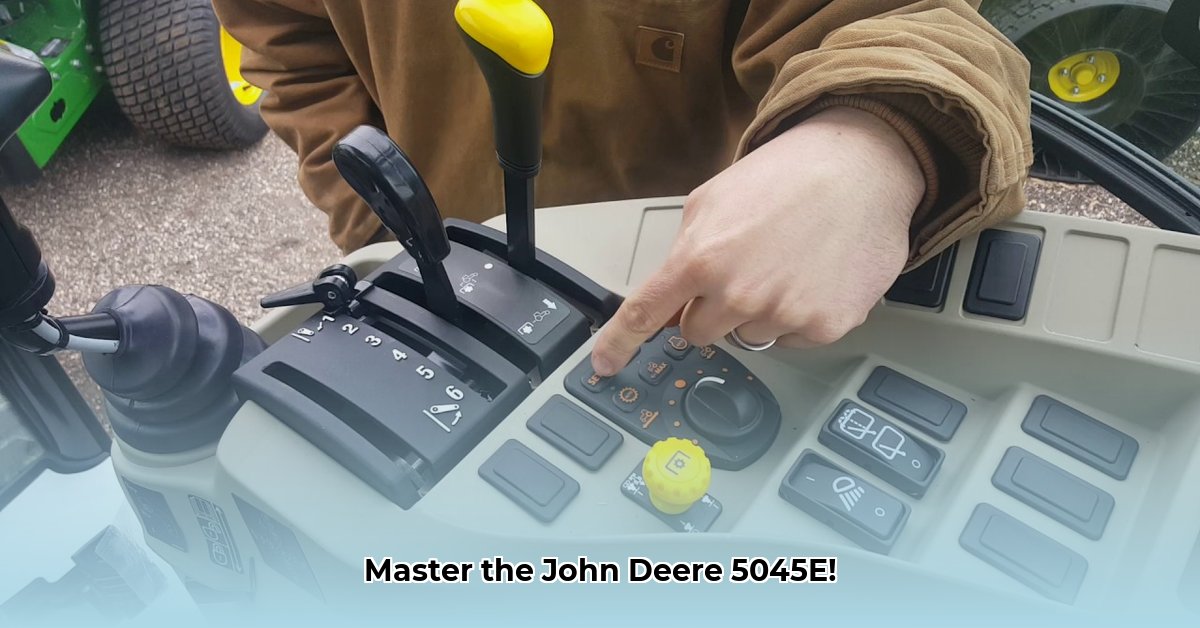
Hydraulic Control Levers: Locate the hydraulic control levers, usually on the armrest. These levers raise and lower implements. (Hydraulic levers precisely control attachments, allowing fine adjustments for various tasks).
Smooth Operation: Avoid jerky movements when operating the hydraulic levers. Sudden movements can strain the system, putting wear and tear on components. (Gentle operation safeguards the hydraulic system and minimizes stress on components).
Engaging the Power Take-Off (PTO): Driving Implements
The PTO transmits power to implements like mowers, tillers, and balers. Correct PTO engagement is vital for safety and efficient operation. Failure to engage or disengage properly can be dangerous.
PTO Clutch Lever: Locate the PTO clutch lever (its exact location depends on the tractor's configuration; consult your owner's manual). To engage, firmly depress the lever and monitor the indicator light which shows that the PTO is engaged. (The PTO lever controls the power transfer to implements, ensuring reliable operation).
Indicator Light: Always observe the indicator light to verify PTO engagement. Never assume it's engaged without visual confirmation. (The indicator light provides visual confirmation of the PTO's status, minimizing potential errors).
Disengagement: Before stopping the engine or disconnecting an implement, always disengage the PTO. Failure to do so can cause injury. (PTO disengagement prevents potential accidents, protecting both the operator and equipment).
Steering and Shifting: Mastering Tractor Maneuverability
Steering the John Deere 5045E is similar to driving an automobile, but the transmission requires careful shifting. Choosing the right gear is crucial for fuel efficiency and the longevity of the tractor's transmission.
Steering Wheel: Use the steering wheel for directing the tractor. (The steering wheel provides precise control over the tractor's direction).
Transmission Controls: Familiarize yourself with the transmission controls and their various settings. Select the appropriate gear for the specific task and terrain. (Different gears optimize the engine's power and efficiency for varied tasks and terrains).
Smooth Shifting: Always shift smoothly and avoid abrupt movements that put stress on the transmission. (Gentle shifting prolongs the life of the transmission and ensures smooth operation).
Safety Features: Prioritizing Operator Protection
The John Deere 5045E incorporates several safety features to protect the operator. Understanding and using these features are paramount for safe operation. This is no different from other machinery such as automobiles and airplanes.
Safety Interlocks: The tractor has safety interlocks that prevent accidental starts or movements. Ensure these are functioning correctly. (Safety interlocks prevent unintended operation, ensuring the protection of the operator).
Roll-Over Protective Structure (ROPS): Always use the ROPS and wear your seatbelt for added protection in case of a rollover. (ROPS and seatbelts provide critical protection in the event of a rollover).
Regular Checks: Regularly inspect all safety features to ensure proper function. (Regular safety checks maintain the integrity of the tractor's protection systems).
Preventative Maintenance: Extending Tractor Lifespan
While your John Deere dealer handles major repairs, simple maintenance tasks can easily be performed. A preventative maintenance routine is key to avoiding costly repairs and ensuring the longevity of your tractor’s life.
Regular Fluid Checks: Regularly check the levels of engine oil, coolant, and hydraulic fluid and top them off as needed. (Regular fluid checks prevent critical system damage as a result of low levels).
Visual Inspections: Conduct periodic visual inspections of belts, hoses, and other components, looking for signs of wear and tear. (Visual inspections assist in the identification of problems before they lead to major failures).
Cleaning: Keep the tractor clean and free of debris. (Proper cleaning prevents mechanical problems caused by debris).
This guide serves as a starting point; always consult your John Deere 5045E owner's manual for specific instructions and safety precautions. Consistent practice and a thorough understanding of these controls and safety features are essential for safe and efficient operation of your John Deere 5045E.